Liascope Astrology is a modern astrology charting application designed to provide a clean and beginner-friendly alternative to cluttered and visually overwhelming astrology tools. The application allows users to generate and explore multiple astrological charts through an intuitive, responsive interface with interactive SVG visualizations.
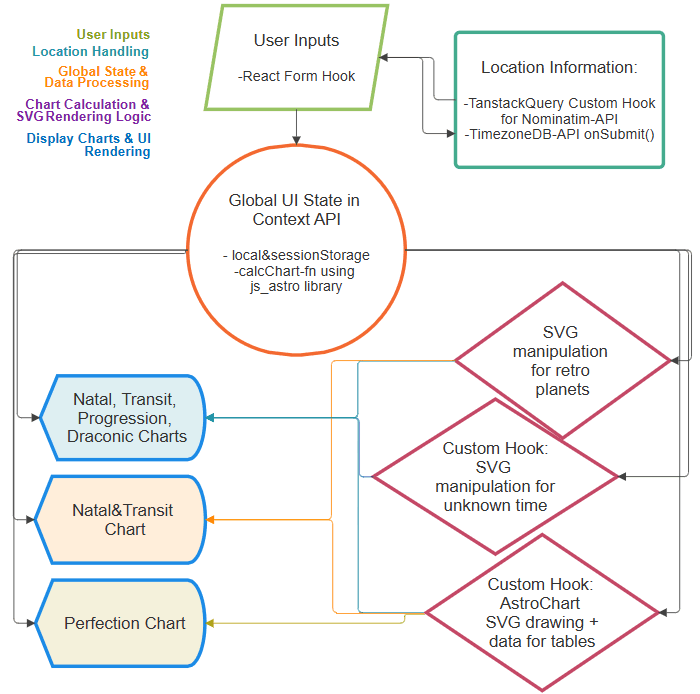
The project originated as a Vanilla JavaScript project structured using the MVC pattern. After validating the core domain logic, the application was refactored and rebuilt with React.js and Next.js.
To enhance the user experience, an AI-powered astrology assistant was integrated using the Gemini API. This enables users to interact with their charts conversationally and receive dynamic, context-aware interpretations generated from structured chart data.
- Ensure full responsiveness and smooth UX across devices, including input handling and chart generation.
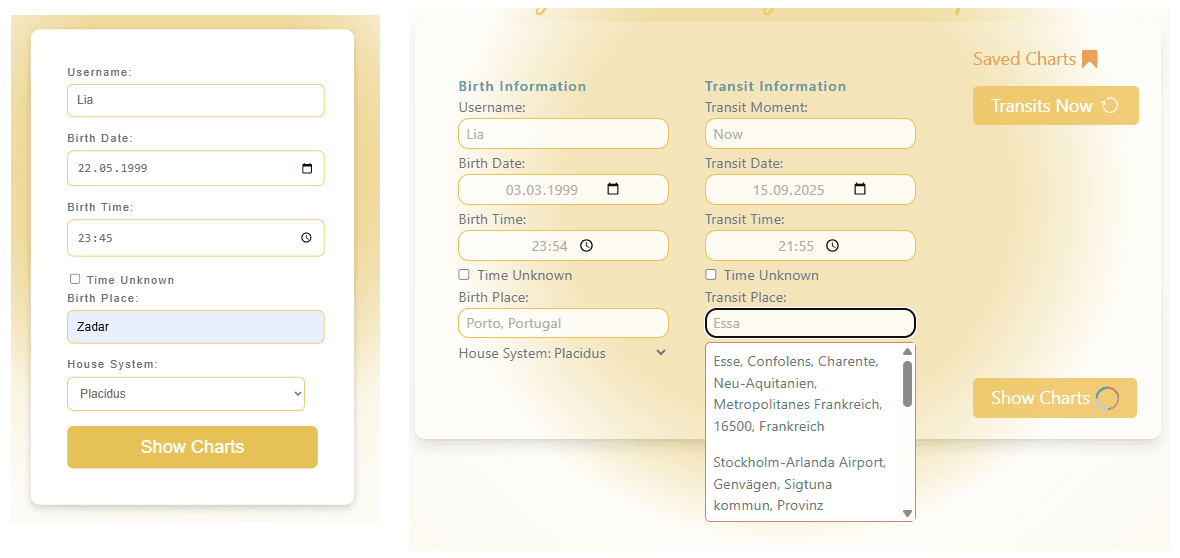
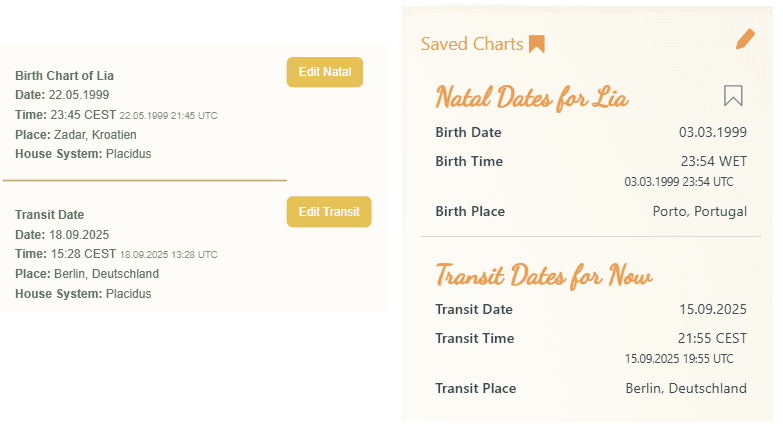
- Expand functionality with new features, such as save & load charts, input & location autocomplete.
- Enable advanced SVG manipulation for interactive, dynamic charts.
Project Evolution: Vanilla JS → React & Next.js
The initial Vanilla JavaScript version was intentionally implemented using a clear MVC architecture to demonstrate structured application design and explicit data flow without frameworks. While this version successfully validated the core domain logic, the project was refactored into React.js and Next.js to align with modern frontend production standards, long-term scalability and maintainability.
Improvements & Technical Progress
Compared to the original Vanilla JavaScript implementation, the React & Next.js version improves flexibility, maintainability, and overall user experience without rewriting the core business logic.
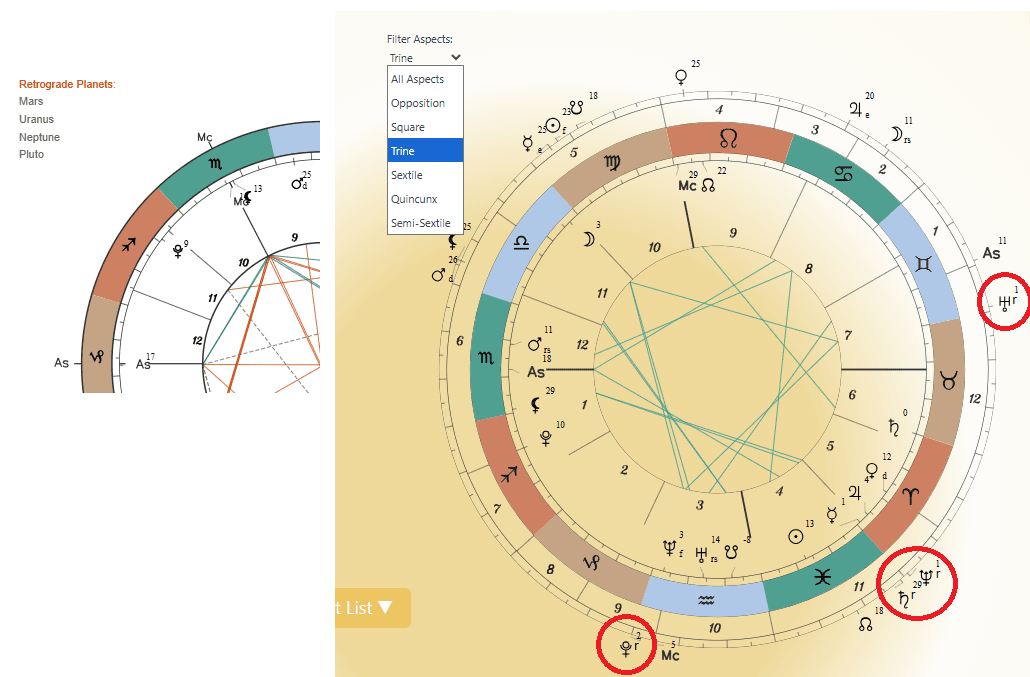
In the initial version, limitations of the external SVG chart library required pragmatic workarounds. For example, retrograde planets were rendered outside the chart because direct SVG manipulation was not yet feasible given my experience at the time.
In the React/Next.js version, SVG rendering is handled internally through custom hooks, enabling direct manipulation of chart elements. This allows integrated retrograde indicators, dynamic filtering, and responsive scaling directly within the SVG. The application was further extended with an AI-powered assistant to support interactive, conversational chart interpretation.
The layout was also fully refactored to be responsive, replacing the desktop-only design of the original version and ensuring a consistent experience across devices.
- Liascope Vanilla JS (left) and Liacope React.js & Next.js (right): 1.Form & Autocomplete functionality - 2.Data Info Table extension - 3.Displaying Retrograde